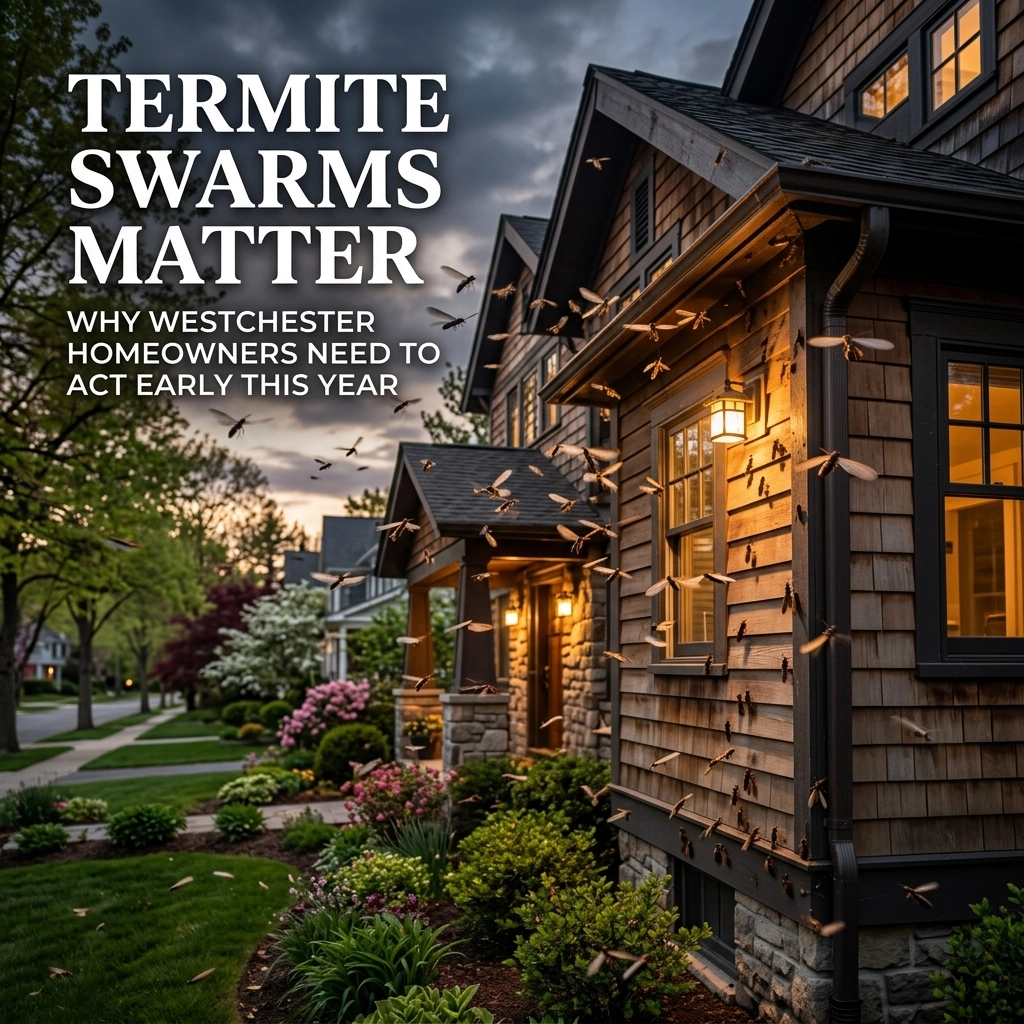
Westchester County is defined by its picturesque landscapes, sprawling suburban estates, and historic architecture that dates back centuries. However, the very environmental factors that make our region beautiful: dense woodlands, high annual precipitation, and a rich layer of organic topsoil: also create a perfect habitat for one of the most destructive biological forces in the United States: the subterranean termite. As the ground thaws and spring temperatures stabilize, a silent biological event begins to unfold beneath the foundations of White Plains, Yonkers, and Scarsdale.
For the modern homeowner, the arrival of spring is often associated with renewal. For the professional exterminator Westchester NY, spring marks the beginning of "swarming season," a critical window where the invisible becomes visible. Understanding the technical nuances of termite behavior is not merely a matter of home maintenance; it is a necessity for the preservation of structural integrity and public safety.
The Economic Reality of Silent Destruction
The scale of termite damage in the United States is staggering. Research indicates that termites cause approximately $6.8 billion in property damage annually. To put this figure into perspective, termites are responsible for more economic loss than fires, floods, and windstorms combined. In Westchester County, where property values are among the highest in the nation, the financial stakes are significantly elevated.
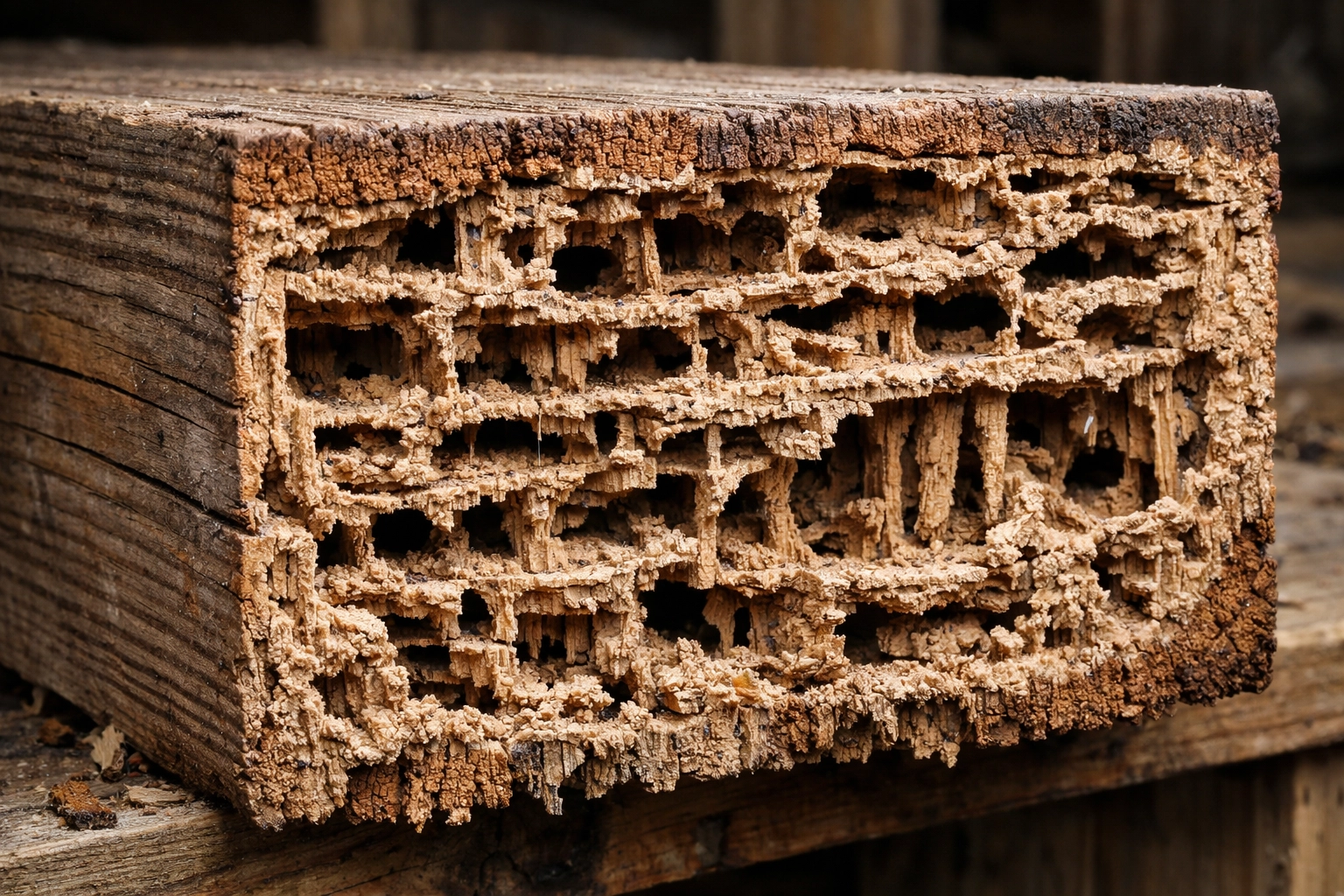
Unlike a fire or a flood, termite damage is incremental and clandestine. A mature colony of Eastern subterranean termites (Reticulitermes flavipes) can consist of hundreds of thousands of individuals. These workers are capable of consuming roughly one pound of wood every 24 hours. While a single pound may seem negligible, the cumulative effect over months or years of undetected activity can result in the catastrophic failure of load-bearing supports, floor joists, and wall studs. Because termites consume wood from the inside out, a beam that appears structurally sound to the naked eye may, in fact, be a hollow shell, compromised to the point of collapse.
The Biology of the Swarm: A Critical Warning Sign
The phenomenon known as "swarming" is the termite colony’s method of reproduction and expansion. When a colony reaches maturity: typically after three to five years of growth: it produces specialized reproductive members called alates. These winged termites emerge in large numbers, often following a warm rain when the humidity is high.
In Westchester, we primarily encounter two species that follow a specific chronological pattern:
- Eastern Subterranean Termites (Reticulitermes flavipes): Typically swarm from March through May.
- Formosan Termites (Coptotermes formosanus): Though less common than the Eastern variety, they are increasingly observed and tend to swarm later in the spring, around May and June.
Seeing a swarm inside a home is an absolute clinical indicator of an infestation. It signifies that a mature colony is likely living directly beneath or within the structure. The "swarmers" themselves do not eat wood; their sole purpose is to find a mate, shed their wings, and return to the soil to start a new colony. However, their presence is a "canary in the coal mine" for the homeowner, signaling that thousands of worker termites have been active on the property for years.
Technical Identifiers: Distinguishing Termites from Ants
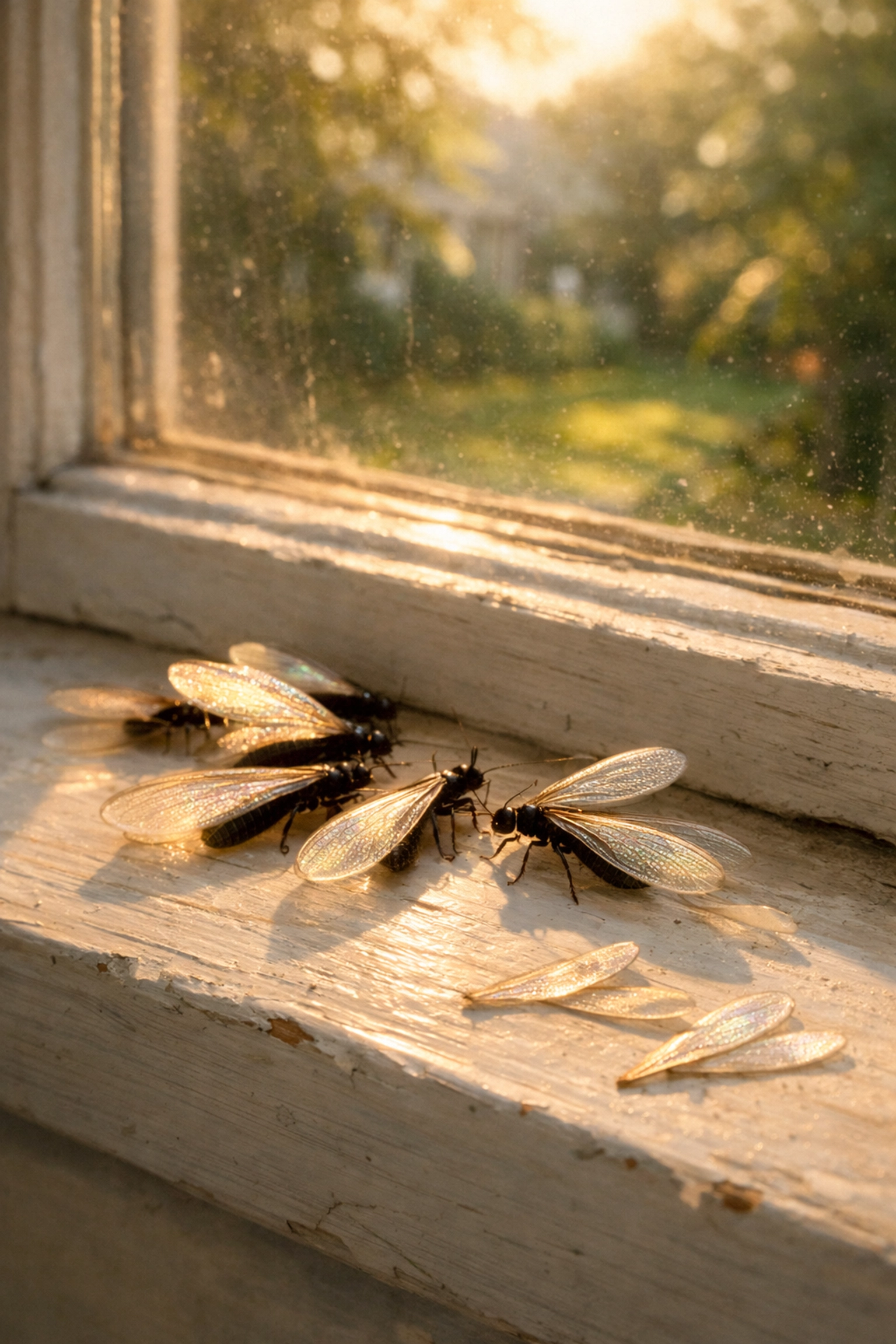
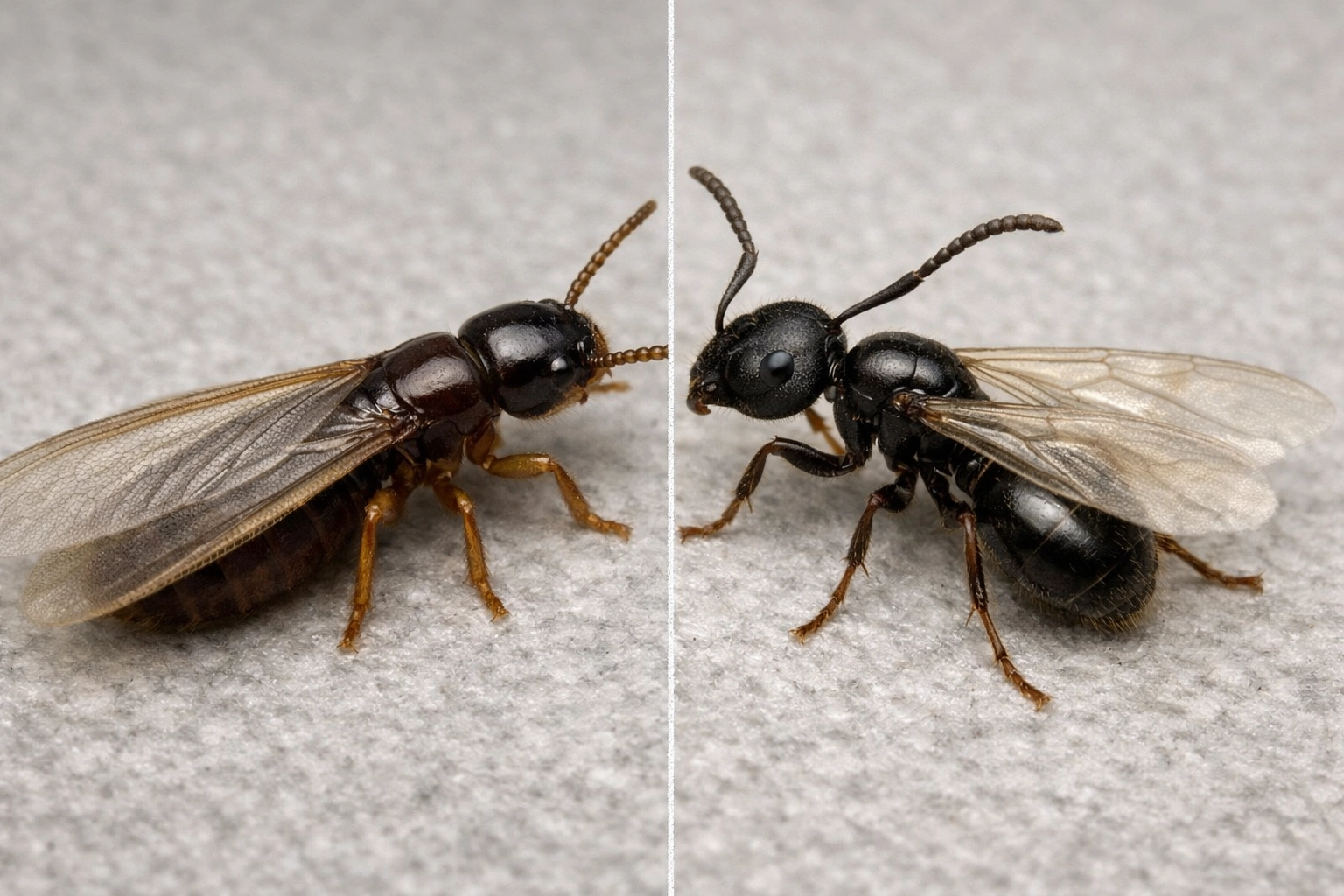
One of the most common challenges for Westchester residents is distinguishing between termite swarmers and flying ants. Misidentification can lead to a false sense of security, allowing the termite colony to continue its destruction. A professional pest control Westchester evaluation relies on three specific anatomical markers to differentiate the two:
- Waist Structure: Termites have a broad, uniform body with no visible "waist." In contrast, ants possess a constricted, "pinched" waist (pedicel) between the thorax and abdomen.
- Antennae: Termite antennae are straight and appear bead-like (moniliform). Ant antennae are distinctly "elbowed" or bent at a sharp angle.
- Wing Symmetry: Termite swarmers have four wings that are equal in length and shape, extending significantly past the end of their abdomen. Ants also have four wings, but the front pair is significantly larger than the hind pair.
If you find discarded wings on windowsills or near entry points, it is a sign that the swarming event has already occurred. These wings are a primary diagnostic tool for our technicians when assessing the severity of a localized threat.
Structural Vulnerabilities in Westchester Homes
Termites are master opportunists. They do not require a large opening to gain access to a structure. In fact, a subterranean termite can penetrate a foundation crack as small as 1/16 of an inch (1.5mm). This is roughly the thickness of a standard credit card. In the older, historic homes prevalent in our region, these microscopic points of entry are ubiquitous.
Once they bridge the gap between the soil and the structure, termites utilize "mud tubes." These are exploratory tunnels constructed from a mixture of soil, saliva, and fecal matter. These tubes serve a dual purpose: they protect the termites from dehydration and provide a secure conduit away from predators like ants or spiders. You will typically find these tubes along foundation walls, in crawl spaces, or behind baseboards.
Common high-risk areas in Westchester properties include:
- Earth-to-wood contact (such as porch lattice, deck posts, or door frames).
- Cracks in concrete slabs or foundation blocks.
- Expansion joints in garages.
- Moisture-rich environments caused by leaking pipes or improper gutter drainage.
Why DIY Termite Control is a Risk to Public Safety
A common misconception among homeowners is that store-bought sprays or "natural" remedies can resolve a termite infestation. From a clinical perspective, this is not only ineffective but dangerous. DIY treatments typically only address the insects visible on the surface. Because the "heart" of the colony remains deep underground: sometimes up to 10 or 20 feet below the surface: surface sprays do nothing to stop the ongoing structural consumption.
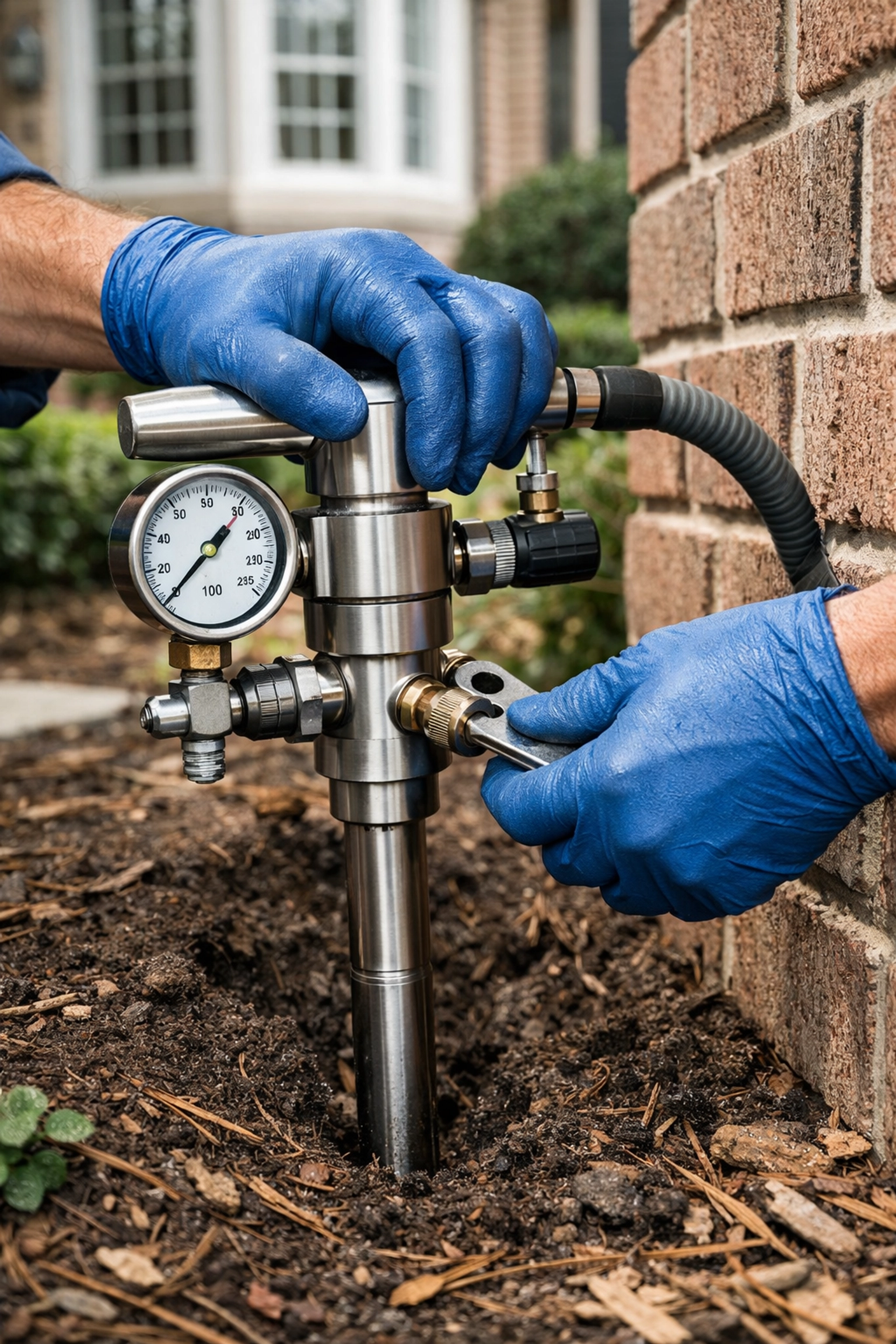
Furthermore, improper application of pesticides can lead to chemical runoff into the local groundwater or cause "budding," where a colony senses a threat and splits into multiple sub-colonies, actually accelerating the spread of the infestation. Dealing with wood-destroying organisms is a "huge responsibility" that requires specialized equipment, such as high-pressure soil injectors and professional-grade monitoring stations that are not available to the general public.
The Westex Approach: Protection of Family and Home
At Westex Pest Management, we view termite control as a matter of structural health and hygiene. Our protocols are designed to provide a "guaranteed" barrier between your property and the soil-dwelling colonies that surround it. We utilize advanced detection technology and site-specific services to ensure that the entire colony is neutralized, not just the swarmers you see on the surface.
Our comprehensive inspection process includes:
- Vulnerability Assessment: Identifying moisture issues and structural breaches.
- Scientific Identification: Confirming the specific species and the extent of the colony's reach.
- Targeted Remediation: Utilizing low-impact, high-efficacy liquid barriers or baiting systems that leverage the termites' own social biology against them.
For those concerned about other seasonal pests, we also provide specialized knowledge on everything from bed bugs to paper wasps, ensuring your home remains a sanctuary.
Act Now Before the Damage Accelerates
The window for early detection is narrow. By the time you see sagging floors or "bubbling" paint (which often indicates termites tunneling just beneath the surface of the drywall), the structural damage is already extensive. Acting during the spring swarm season allows for the most efficient intervention.
Protecting your Westchester home is an enormous task, but it is one you do not have to face alone. Westex Pest Management brings decades of regional expertise to every inspection. We encourage homeowners to review our articles and updates for more information on local pest trends or check our current coupons for seasonal inspection specials.
Don't wait for the swarm to find you. Ensure the safety of your family and the longevity of your home by scheduling a professional termite evaluation today. In the battle against Reticulitermes flavipes, early detection is the only definitive defense.
For more information on other common spring invaders, you can also explore our guides on silverfish, carpenter ants, or american cockroaches. Protecting Westchester isn't just our job; it's our commitment to the community's health and safety.